The Douro Valley
The origin region of Port Wine
Douro Valley from Porto: Best Tours, Wine Tasting & Day Trip Guide (2026)
Contents
Updated April 2026
I've been living in Porto for more than a decade and have taken the Douro Valley Wine Tour in various ways: by train, bus, and on paid tours.
I know that, every week, thousands of travelers leave Porto for a day in the Douro Valley, and almost all of them say the same thing: they wish they'd gone sooner.
Because I know it's an experience that can fill your heart with amazing memories and a taste of the real Portugal, I've taken the time to write this article with everything I know about o Douro.
Here's exactly what to expect from the region, which tour to take, what to expect from these tours, and whether it's worth your time. Before booking, check the Porto weather forecast since clear days provide the most spectacular valley views.
So, why visit the Douro? What's about it?
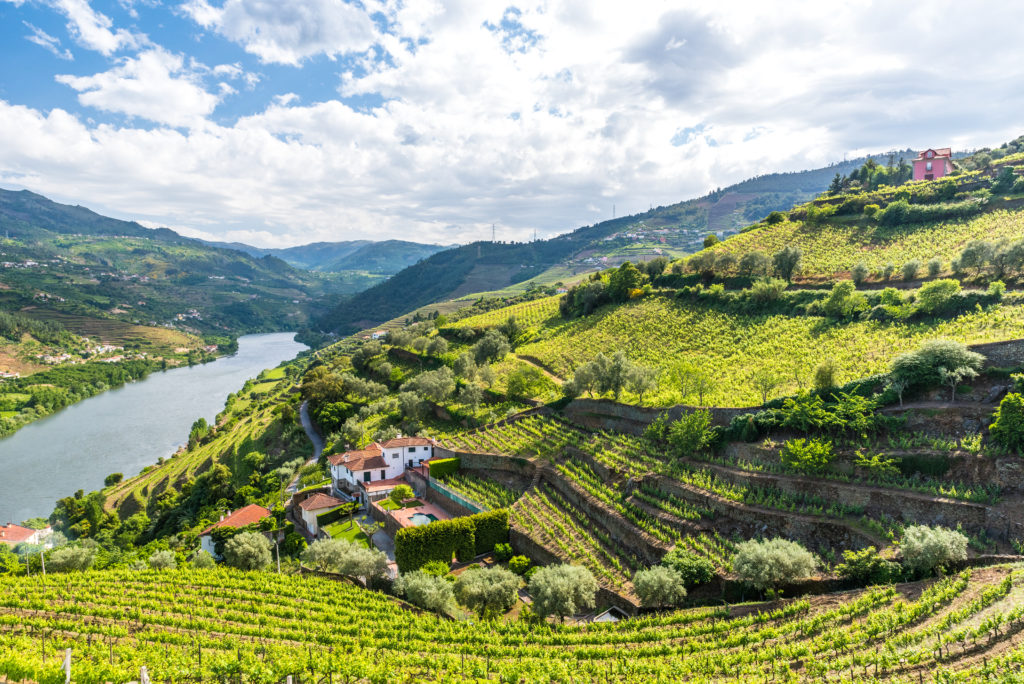
The Douro Valley is a wine region of Portugal with more than two thousand years of existence. For centuries, grapes have been planted and harvested by hand on its steep terraces that end by the Douro river (hence the name).
This valley represents one of the most beautiful landscapes in Portugal. It's also one of the most best places to visit in Portugal, according to hundreds of travel guides from experts and non-experts.
Several reasons confer the Alto Douro wine-growing region the title of World Heritage Site by UNESCO: its cultural importance, its fertile land and the particular climate, and the world-renowned quality of its wines.
It is also the oldest demarcated wine region in the world, and one of the most important of Portugal wine country.
The Douro River originates in Spain, in Soria, where it is called the “Duero”, and flows into the Atlantic Ocean, on the coast of Matosinhos, very close to the center of Porto. Throughout its course, it crosses and joins the northeastern part of the Iberian Peninsula.
For the city of Porto, it is of special importance, as it has historically served as a promoter of trade flows, communicating the metropolis with several neighboring cities.
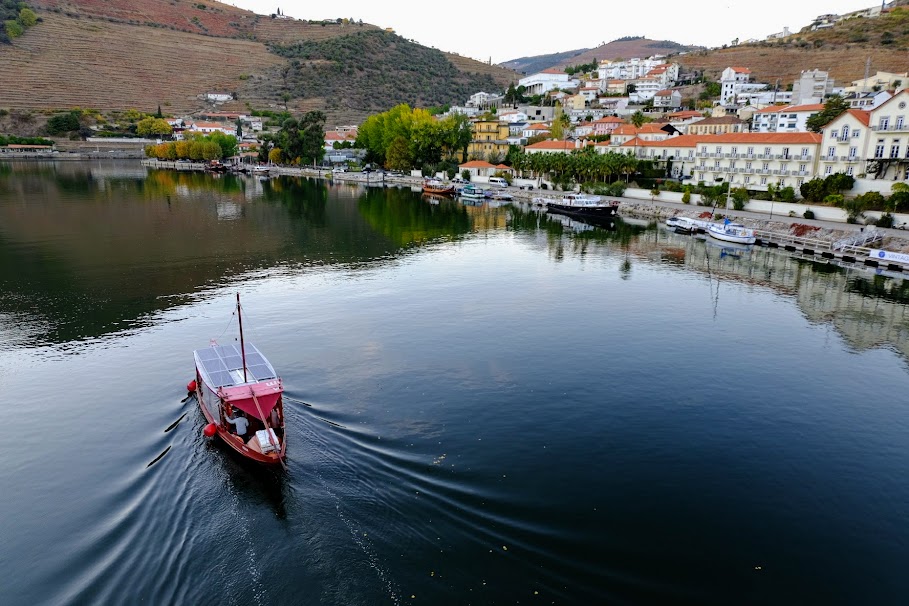
For the distribution of Port wine the river has been its main channel.
Traditionally, it was through the waterway that the wine was transported from the Douro valley to the port wine cellars in Vila Nova de Gaia. Once aged, it is then marketed to the rest of the world.
This river trip was done decades ago in Rabelo boats (a typical Douro boat), and you can still admire them in the River by the Dom Luis Bridge or in front of the wineries in Porto.
Today the grapes and wine are transported in small trucks that you can see moving around the Douro Valley, especially at the end of the summer, during the grape harvest season.
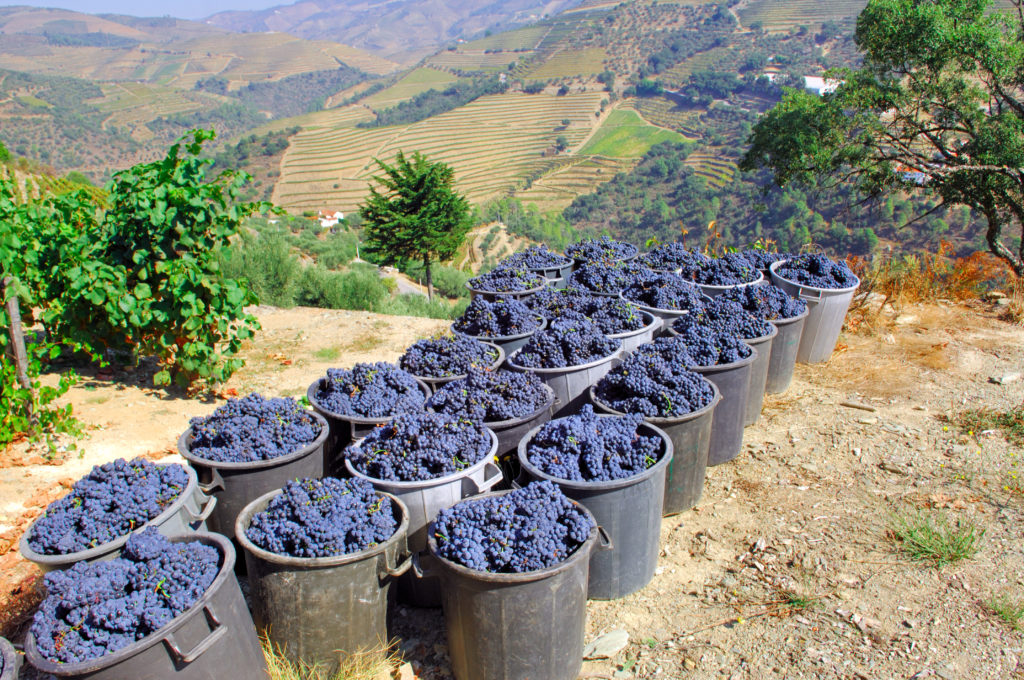
One question many visitors ask is about the types of wines that are produced? In the valley, not only port wine is made. The Douro Valley also produces some of the best red and white wines in Portugal and the world.
But let's cut it short, for you are here for a reason: you want to visit.
Want to know what a day trip itinerary looks like?
Douro Valley Wine Tour — Full Day Itinerary for this tour
Price: €99-€105
Duration: ~10 hours | Departs from Rua Mouzinho da Silveira, 352 (near São Bento Station)
- 08:30 — Meet your guide at the meeting point. Board the air-conditioned minibus toward the Douro Valley.
- ~10:00 — Stop in Amarante — walk the old town, cross the ancient bridge, try the local traditional sweets (caralhinhos).
- ~11:00 — Scenic stop at Galafura viewpoint — one of the highest points in the region with sweeping Douro Valley panoramas.
- ~11:30 — 1st Winery: Casa dos Barros — guided tasting of Reserve Ruby Port and Tawny Port, paired with regional olive oil, cheese, and bread.
- ~13:30 — Traditional Portuguese lunch with wine included (vegetarian/vegan/gluten-free options available).
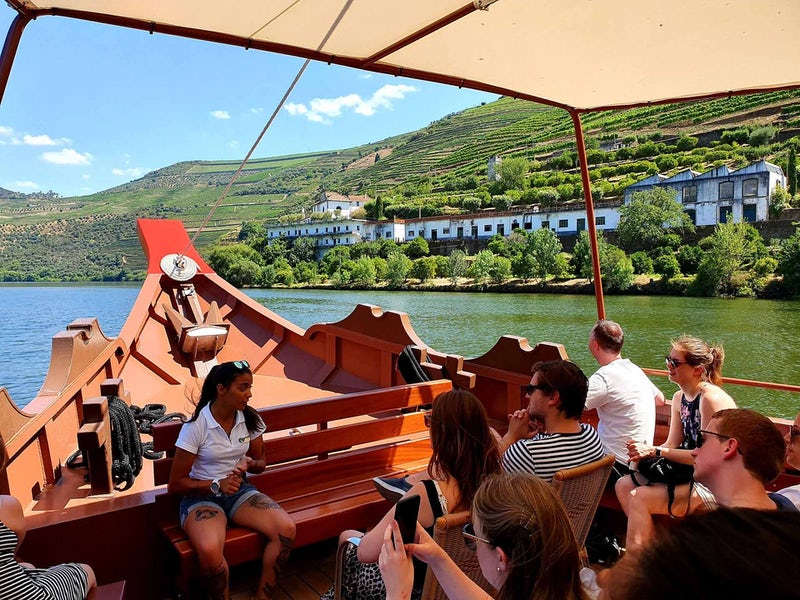
- ~15:00 — Head to Pinhão. Board a Rabelo boat for a 1-hour panoramic river cruise on the Douro.
- ~16:30 — 2nd Winery visit — Quinta da Roeda (Croft/Taylor's) or São Luiz (Kopke/Calem). Tour the vineyards, learn about production, and taste more Port wines. Option to purchase bottles.
- ~18:30 — Return to Porto, drop-off at Rua de Alexandre Herculano (near Praça da Batalha).
Is a Douro Valley Day Trip Worth It?
Yes — and it's not even close. Here's why travelers consistently say it's the best day they had in Porto:
- You get the full picture in one day. Terraced vineyards, river views, wine cellars, and a proper lunch, all without renting a car or planning a single thing. And the most important one: human touch.
- The wine alone justifies the price. Multiple tastings of Douro DOC wines and Port are included. Buying those bottles individually at a restaurant would cost more than the tour.
- The Douro is genuinely stunning. UNESCO-listed landscape. One of those places that looks better in real life than in photos.
- No Porto day trip comes close in value. Compared to Sintra, Alentejo, or Guimarães: this one delivers the most sensory payoff per euro spent.
- You leave with zero regrets. The #1 complaint from Porto visitors? “I wish I had done the Douro.” Not the other way around.
Visiting the Douro Valley Region from Porto
In Porto, you can visit the cellars, learn how the wines are produced, and enjoy a Port Wine tasting session.
However, it is in the Douro Valley Wineries where you can live the whole, real experience.
Visiting a “Quinta” (the Portuguese equivalent of estates, where grapes are grown), walk through its vineyards, enjoy the fantastic views, and taste the best wines of the Douro region, that's what you want to experience. And it is something we highly recommend doing as a day trip from the city.
On a road with unique landscapes, it takes about an hour and a half by car. The only disadvantage is that you won't be able to extend your tasting if you have to drive back.
Now, how far it's the Douro Valley from Porto? Short of 60 miles (97 km), and the trip, by car, is about 1 hour 15 minutes. But it really depends on where you're going to, because there are two main towns with wineries close to Porto.
Read below to find out where these are.
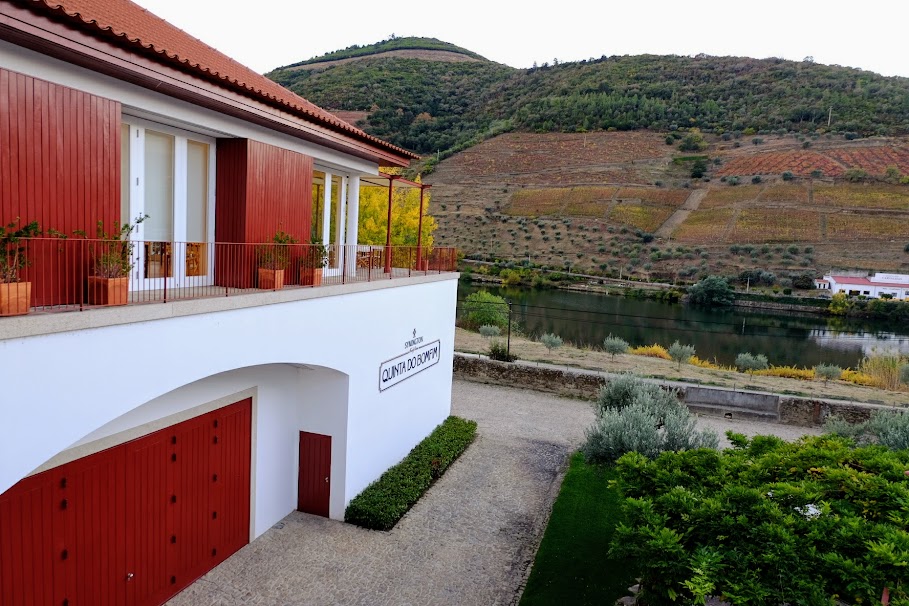
When to Visit the Douro Valley: A Season-by-Season
No two visits to the Douro Valley are the same: the landscape, the crowds, and the experience shift dramatically depending on when you go.
Here's what to expect in each season so you can pick the right time for your day trip from Porto.
🍇 Autumn: September–October (Best Overall)
Harvest season is the Douro Valley at its most alive.
The terraced vineyards turn amber, gold, and deep red as the grapes ripen, and the Quintas are in full operation. You can watch (and sometimes join) the hand-picking that has defined this region for over two thousand years. The air smells of fermentation. The winemakers are on-site. The energy is unlike any other time of year.
September and October also offer ideal weather for a day trip: warm but not scorching, with long golden afternoons and some of the best photography light of the year.
The Douro River is at its most dramatic, reflecting the autumn foliage on both banks.
Book your tour early. Harvest season is the most in-demand period: spots on small-group tours sell out 2–3 weeks in advance, sometimes more for weekends.
🌸 Spring: March–May (Best for First-Timers)
Spring is the second-best season and arguably the most beautiful for scenery. The vineyards are bright green, wildflowers appear along the valley walls, and the temperatures are perfectly comfortable for walking, viewpoints, and boat cruises. Crowds are significantly smaller than in summer or autumn, which means easier bookings, more attentive guides, and a more intimate winery experience.
March–April is also the sweet spot before peak tourist season kicks in across northern Portugal — if you're planning a Porto trip and want the Douro Valley without the chaos, this is your window.
☀️ Summer: June–August (Good, But Plan Ahead)
The Douro Valley in summer is stunning — clear blue skies, the river at its most inviting, and long days that give tours plenty of light. The downside: it is genuinely hot, with temperatures in the valley regularly hitting 35–40°C. Wear sunscreen, bring water, and don't underestimate the midday heat at open viewpoints like Galafura.
Summer is also the busiest period. Tours fill up fast, particularly on weekends and throughout July and August.
Book at least a week in advance, ideally more for small-group tours.
❄️ Winter: November–February (Quiet & Underrated)
Winter in the Douro Valley is the best-kept secret for travelers who want the experience without the crowds. The vineyards are dormant, the landscape is quiet and mist-covered, and the Quintas are almost entirely to yourself. Some tour operators run year-round — and prices are typically lower.
The trade-off: a handful of smaller family estates operate limited winter hours or close entirely between visits, so your tour may cover fewer wineries. The weather can also be cold and rainy, particularly in December and January.
That said, there is something genuinely magical about a warm wine tasting inside a centuries-old estate while rain falls on the valley outside. If you're visiting Porto in winter, don't let the season talk you out of the day trip.
Quick Reference for your trip
| Season | Scenery | Crowds | Booking Lead Time | Best For |
|---|---|---|---|---|
| Autumn (Sept–Oct) | ⭐⭐⭐⭐⭐ | High | 2–3 weeks | Harvest experience, photography |
| Spring (Mar–May) | ⭐⭐⭐⭐⭐ | Low–Medium | 3–5 days | First-timers, comfortable weather |
| Summer (Jun–Aug) | ⭐⭐⭐⭐ | Very High | 1–2 weeks | Long days, clear skies |
| Winter (Nov–Feb) | ⭐⭐⭐ | Very Low | Same week | Budget travelers, solitude |
Getting to the Douro Valley by train: Peso da Régua Station or Pinhão Station
You can take the train from Campanhã station to Peso da Régua (Regua station).
The trip takes 2 hours each way and the ticket costs around 20€, depending on your choice.
There's another train station in the Douro, it's called “Pinhão”. It is within walking distance of two beautiful Quintas and restaurants.
Both trips can be booked within the cp.pt (“Trains of Portugal”).
Another terrific alternative, although more expensive than the regular train, is to get on the historic train in Peso da Régua, which goes to the area of Tua on the banks of the river in a steam locomotive built in 1925. See all the information on the official website. The disadvantage of this option is that the train arrives in the city center, and you have to find your way around the area.
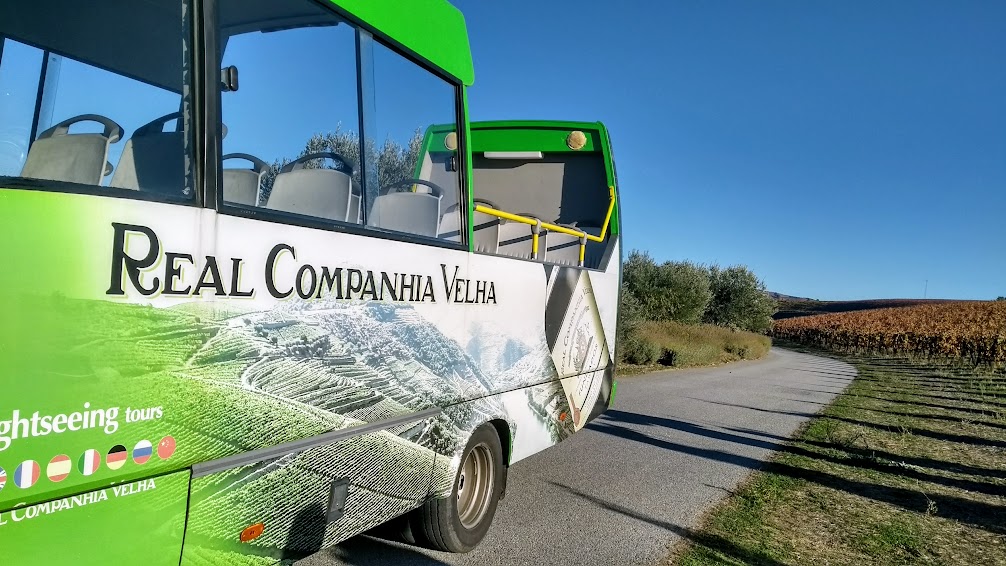
Guided tours of the Douro Valley from Porto
You can also take a guided tour from Porto. Some companies use the bus, the train or even the river cruise. This alternative allows you to relax, better enjoy the experience and do the wine tasting without having to worry about driving back to Porto.
We have a sister company that sells such tours; find out more about our best-seller Douro Valley Wine Tours from Porto. It includes 2 Wineries, Tastings, River Cruise, and Lunch
Your questions about the Douro Daytrip:
Yes — a Douro Valley day trip from Porto is one of the most popular and well-organized excursions in northern Portugal. Most guided tours depart from central Porto between 7:30am and 9am and return by 6pm–7pm, making it a comfortable full-day experience. The drive to the heart of the wine region takes roughly 1.5 hours each way. You can also reach the valley independently by train on the scenic Douro Line, which runs from Porto Campanhã station to Pinhão — a beautiful journey of about 2.5 hours. For most visitors, a guided tour is the easiest option: transportation, lunch, wine tastings, and a river cruise are all included, and you won't have to worry about driving back after a day of wine tasting.
The most consistently recommended Douro Valley tour from Porto combines visits to two family-run wineries (Quintas), a traditional Portuguese lunch, and a one-hour Rabelo boat cruise on the Douro River near Pinhão. Small-group tours in luxury vans — rather than large coaches — are strongly preferred by travelers for the flexibility, the commentary from local guides, and the access to family-owned estates that bigger operators skip. Expect to pay between €85–120 per person for a full-day small-group experience. Our best-seller tour from porto.travel includes 2 winery visits, tastings, a river cruise, and lunch — check current availability and pricing here.
Absolutely — the Douro Valley is one of the most visually stunning and culturally rich destinations in Portugal, and a full day is enough to experience its highlights. The terraced vineyards, the Douro River, the viewpoint at Miradouro São Leonardo de Galafura, and the experience of tasting port wine where it's actually produced are things that a visit to a Vila Nova de Gaia wine cellar simply cannot replicate. Even travelers who are not wine enthusiasts consistently rate the scenery, the food, and the boat cruise as highlights of their entire Portugal trip. If you have even one spare day in Porto, the Douro Valley is the day trip to spend it on.
The two best times are spring (March–May) and harvest season (September–October). In spring, the valley is green, the weather is mild, and the crowds haven't yet arrived — ideal for photography and comfortable walking. Harvest season is the most spectacular: the vineyards turn gold and red, grapes are being picked by hand on the terraced slopes, and some estates allow visitors to participate. Summer (June–August) is beautiful but hot, and the most popular tours sell out days in advance — book early. Winter is the quietest period, with fewer tourists and a more intimate atmosphere, though some Quintas operate limited hours. For a river cruise specifically, spring and autumn offer the best light and the most pleasant temperatures on the water.
What do in the Douro Valley
The best wine tours in the Douro
Tour of the Douro Valley vineyards, Wine Tasting in 2 wineries, Lunch & Cruise
Wine tasting, boat ride, traditional lunch and spectacular views. One of the best Douro Valley Wine Tours.
Boat ride in Peso da Régua
50 minute boat ride from Peso da Régua through the landscapes of the Douro Valley.